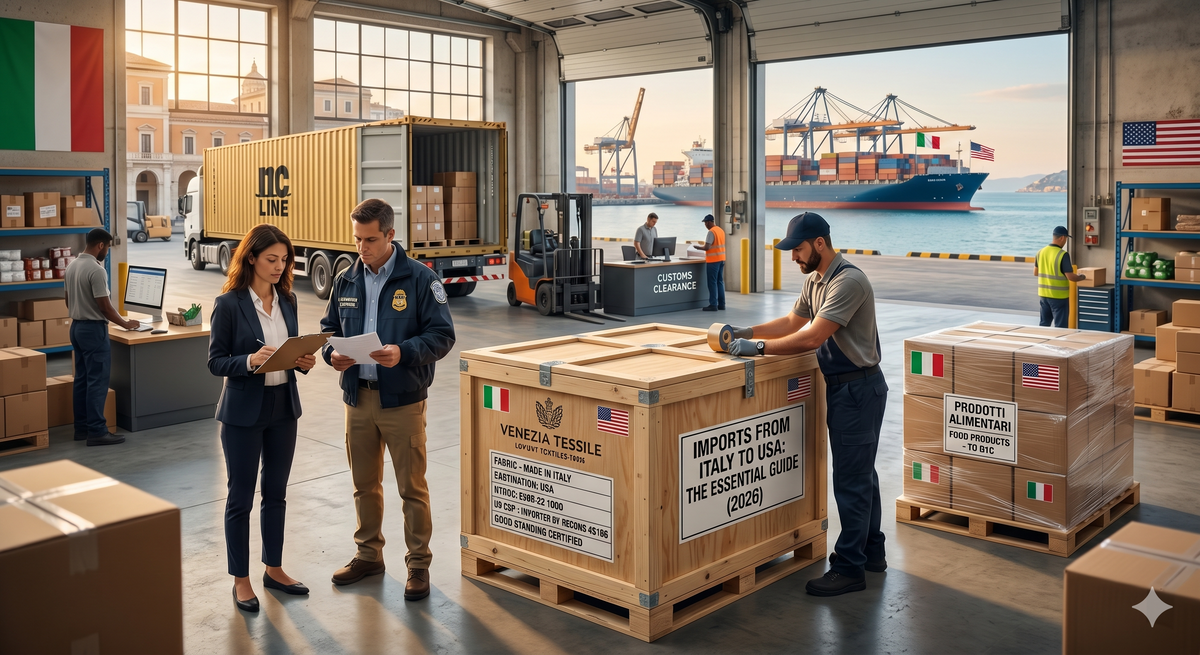
Importing products from Italy to the USA can be a great opportunity for businesses that want access to high-quality goods, unique food products, fashion, home décor, machinery, and specialty items. But successful importing is not just about booking a shipment — it requires the right paperwork, compliance checks, customs planning, and a clear understanding of U.S. import rules.
Whether your clients are importing one shipment or building a long-term supply chain, knowing the key requirements ahead of time can help avoid delays, unexpected costs, and compliance issues.
Why Italy to USA Imports Matter
Italy is known for products that often carry strong brand value, craftsmanship, and authenticity. For U.S. buyers, that can mean higher demand and better margins, but only if the import process is handled correctly. The challenge is that different product categories are regulated differently, especially food, supplements, and other FDA-regulated goods.
For businesses, the biggest advantage comes from preparing before the shipment leaves Italy. That means confirming product eligibility, checking documentation, and making sure the importer is ready to clear customs on arrival.
What Clients Should Prepare
Every importer should start with the basics: a clear product description, commercial invoice, packing list, and shipping documents. For many shipments, the importer also needs an importer number, and CBP entry forms must be completed within 15 calendar days of arrival at a U.S. port of entry.
Clients should also know that some products may require a license, permit, or agency-specific approval. In most cases, a general import license is not required, but the right federal agency still needs to be checked before shipping.
Food Imports Need Extra Care
If the shipment includes Italian food products, the compliance requirements become more important. FDA requires prior notice before food is imported into the United States, and most facilities that manufacture, process, pack, receive, or hold food must register with FDA every two years.
Food imports must also be safe, wholesome, and labeled correctly in English, and FDA may verify food facility registration, product details, and other compliance data at entry. For certain food categories, importers may also need to address FSMA requirements, including Foreign Supplier Verification Program obligations.
Common Risks and Delays
Many import problems happen because of incomplete paperwork, inaccurate product descriptions, or missing compliance information. FDA notes that incorrect or incomplete entry data can delay review, and shipments may be held for additional inspection or documentation requests. This is especially true for food products, where import alerts, labeling issues, or registration problems can trigger delays.
Other common issues include unexpected duties, fees, or incorrect tariff classification. Importers should also make sure the shipment’s Incoterms, delivery responsibilities, and customs clearance steps are clearly understood before shipping begins.
How To Make Imports Smoother
The best way to reduce risk is to treat importing like a process, not a one-time shipment. That means working with a knowledgeable freight forwarder, confirming product regulations early, and preparing all required documents before cargo leaves Italy.
It also helps to review product-specific requirements by category. For example, food and beverage imports often require FDA review, while other products may fall under different agency rules or certification standards.
What Clients Should Remember
Your clients should remember three things: first, not every product can be imported the same way; second, paperwork matters as much as shipping; and third, compliance problems can be expensive once the cargo is already in transit. The more prepared they are before shipping, the faster their goods can move through U.S. customs.
A well-managed Italy-to-USA import process protects the shipment, the brand, and the customer experience. For businesses that want reliable results, preparation is the real competitive advantage.